Pallets, Cable Reels and Offcuts: Practical DIY Projects with Reclaimed Wood in South London
Ideas and step‑by‑step guidance for Croydon and nearby residents to turn pallets, cable reels and reclaimed offcuts from Solo Wood Recycling into bookshelves, desks, garden furniture and kids’ projects — with sourcing, selection and sustainability tips to make your build successful.

Why choose reclaimed wood for your next project
Reclaimed timber is both an economical material and a simple way to reduce waste. Using pallets, cable reels and offcuts diverts wood from landfill, lowers the carbon footprint of your build and often gives you richly characterful boards that new timber cannot match. Solo Wood Recycling, a Croydon‑based social enterprise on Factory Lane, specialises in rescuing and reconditioning timber for builders, designers and hobbyists across the local boroughs — so choosing reclaimed materials here supports local jobs, training and a circular approach to resources.
What you can find at the Factory Lane yard
The yard is stocked with pallet slats and complete pallets, cable reels in various diameters, scaffold and floorboards, trim and architectural salvage, plus offcuts and oddments ideal for smaller builds. Customers regularly praise the variety and the helpful guidance from staff when selecting suitable pieces. Expect a rummage‑style treasure trove: some items are ready to use, others need cleaning or trimming, and many are ideally suited to small projects, furniture repairs and creative upcycling.
Project 1 — Simple bookshelves from pallet boards
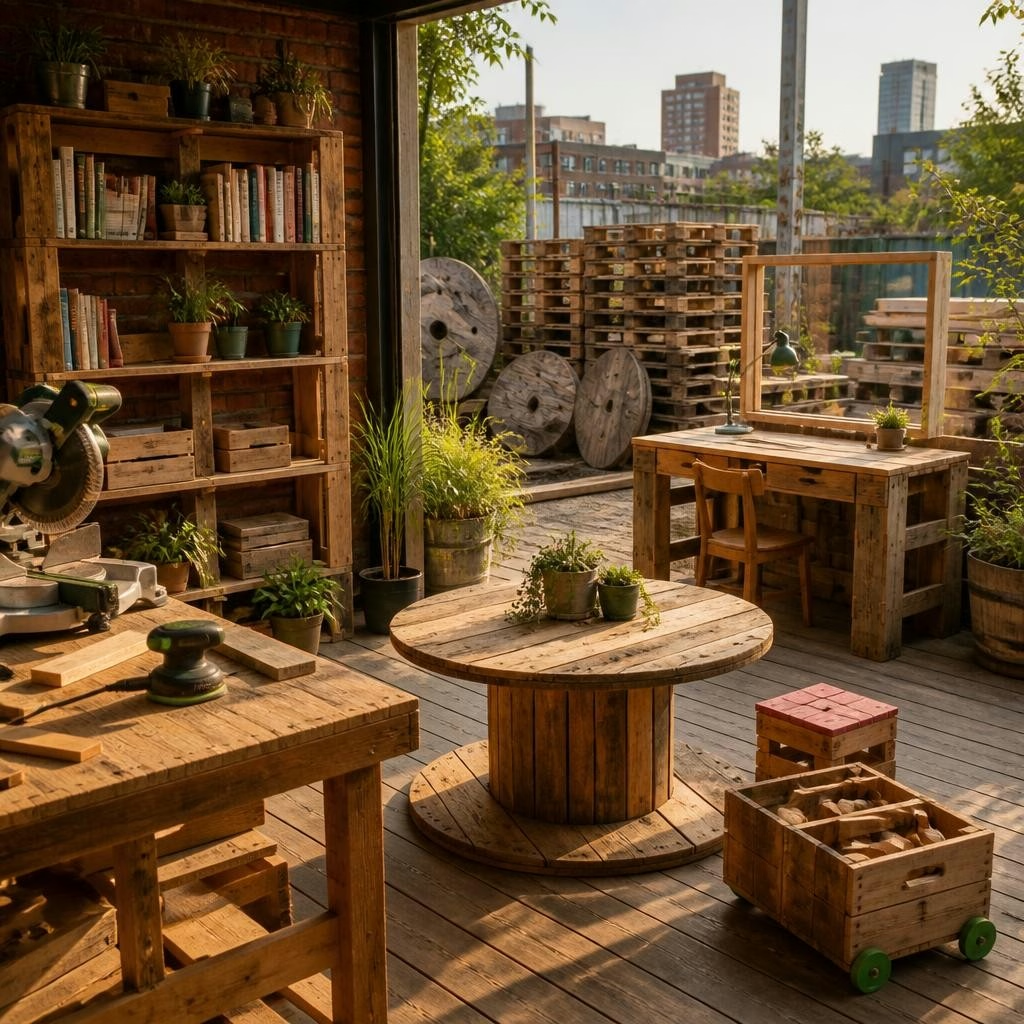
Why it works: pallet boards are long, sturdy and easy to source. Basic steps: 1) Select straight, sound slats and check for nails or staples. 2) Carefully remove boards from the pallet using a crowbar and add a small cut at the board ends to avoid splitting. 3) Plane or sand to remove rough fibres and flatten surfaces. 4) Join boards side‑by‑side for shelves using battens at the back or tongue‑and‑groove battens for a neater finish. 5) Finish with a natural oil or water‑based sealant if the shelf will hold plants or be exposed to moisture. For a lighter, safer family project, consider pre‑cut shelf lengths and supervise power‑tool use.
Project 2 — Cable reel coffee table or desk
Cable reels make quick, striking tables: the round top and cylindrical base are ready‑made. Choose a reel with a stable, damage‑free top and a diameter that suits your space. Steps: 1) Remove loose nails and sand both faces. 2) If using as a coffee table, cut the core or add a level base to prevent wobble; for a desk you can mount a flat top (ply or reclaimed board) over the reel for extra workspace. 3) Add caster wheels or adjustable feet for mobility and height adjustment. A protective finish prevents stains; leave the centre hollow for a quirky storage nook.
Project 3 — Raised beds, planters and garden furniture
Garden projects are ideal for reclaimed timber: palettes and offcuts are cost‑effective for raised beds, compost bins and benches. Select thicker, untreated boards for structural pieces; avoid any timber treated with unknown chemicals for vegetable beds. Basic raised bed build: assemble a simple framed box with corner posts, lining the inside with landscaping fabric if desired. For benches and plant stands, join scaffold boards or reclaimed floorboards onto a sturdy frame and reinforce corners with metal brackets. Staff at the yard often help suggest which wood types suit outdoor use and which should be kept for decorative interior pieces.
Practical tips for sourcing, loading and preparing reclaimed pieces
Bring measurable dimensions and a clear plan to the yard to focus your search. Inspect boards for rot, active insect damage or heavy surface contamination; minor staining and patina are acceptable and often desirable. Expect a rummage approach: allow time to look through stacks, and wear gloves and boots. Parking at Factory Lane can be tight; however, staff at Solo Wood Recycling routinely assist with loading vehicles and offering practical advice — something several customers have noted when collecting bulk items. If you’re new to reclaimed wood, ask about recommended offcuts for beginners and whether any short workshops or guidance sessions are available.
Sustainability, community impact and how to get started
Reusing reclaimed timber is a tangible way to reduce waste and support a circular local economy. By sourcing materials from Solo Wood Recycling in Croydon you not only save on project costs but also back a not‑for‑profit enterprise focused on training and keeping usable wood out of landfill. If this article has sparked an idea, plan a visit to the Factory Lane yard: bring your project measurements, expect to browse, and ask the team for loading help and material suggestions. For hands‑on confidence, enquire about workshops and advice sessions that can introduce safe techniques for dismantling, joining and finishing reclaimed wood.
Customer review


Article by
Solo Wood Recycling
South London Wood Recycling Project is a Croydon-based not-for-profit social enterprise dedicated to saving timber from landfill. We rescue 60-100 tonnes of wood every month, reconditioning high-quality material for eco-conscious builders, DIYers, and designers. Whether you need raw reclaimed timber for a home project or a unique piece of bespoke furniture commissioned from our expert workshop, we provide sustainable solutions that don't cost the earth. From pallets and scaffold boards to architectural salvage, our yard is a treasure trove for creators. By choosing us, you’re supporting local jobs, volunteer training, and a greener London. Visit our yard or contact us today to start your next sustainable project!