How Much Does Reclaimed Wood Really Cost? Budgeting Your DIY Project in South London
A practical guide to estimating material costs at Solo Wood Recycling in Croydon, with real customer examples, budgeting tips for common projects, and how reclaimed timber compares to buying new at big‑box stores.

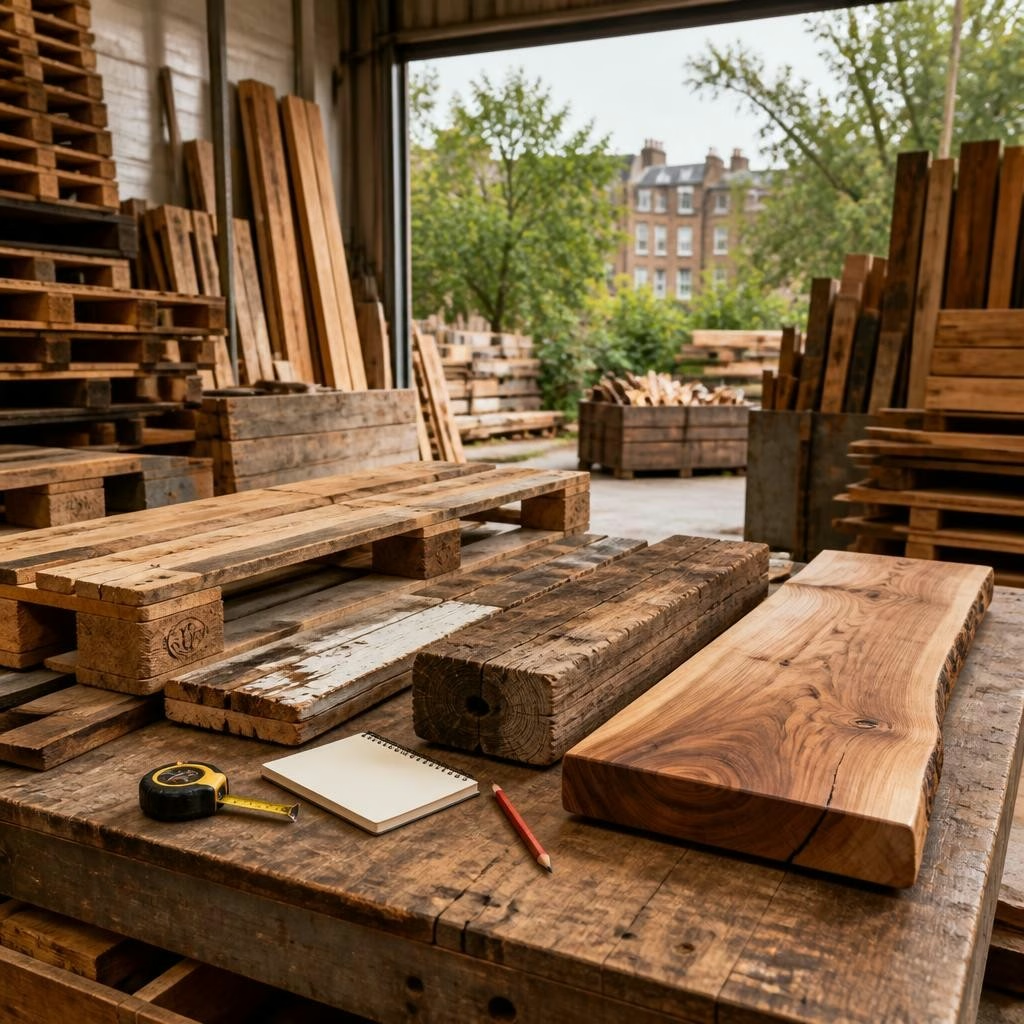
Why price matters — and why reclaimed timber is different
Reclaimed timber isn’t sold like mass‑produced board from a chain store. At Solo Wood Recycling in Croydon you’re buying history, character and a lower environmental footprint: the project rescues 60–100 tonnes of wood each month and reconditions high‑quality material for builders, DIYers and designers. That mix — variable sizes, condition, provenance and the labour that goes into cleaning and sorting — means prices are more varied but often offer better value for sustainable projects.
Key factors that determine cost
Expect prices to depend on several practical factors: the type of item (pallets and offcuts vs. well‑preserved floorboards or architectural salvage), board dimensions and grade, visible condition (rot, splits, nail or screw removal required), and whether staff have already planed or surface‑finished the piece. Rare or decorative elements — Victorian boards, reclaimed doors or furniture parts — will usually command higher sums because of their look and the time needed to prepare them.
Real customer examples to give you an idea
Customer feedback gives a grounded sense of what to expect. For example, one visitor reported buying pallets for a few pounds apiece and another described assembling a small garden purchase for about twenty pounds in total. Reviews repeatedly praise helpful staff who advise on suitable alternatives for novice makers, and note that the yard’s pricing approach — including donation or bargain sections — makes many projects far more affordable than buying all new materials.
What different materials usually cost (qualitative guide)
Pallets and large offcuts: typically the most economical option — great for compost bins, simple planters and rough framing. Scaffold boards and standard boards: mid‑range in cost; useful for decking, benches and sturdy furniture after cleaning. Well‑preserved floorboards, long planks and architectural salvage: rarer and often pricier per metre because they require careful selection and sometimes more reconditioning. Small feature pieces, reclaimed doors or antique elements: unique and variable in price — great for focal furniture or one‑off commissions but expect to spend more time searching and more money for standout pieces.
Example budgets for common projects
Small planter or compost bin: many customers have put together these projects largely from pallets or offcuts, keeping material costs very low. A basic garden bench or simple shelf: achievable by combining scaffold boards and offcuts from the yard — you’ll spend more time selecting the right boards but frequently less than buying new premium timber. Feature shelf, floor repair or bespoke furniture: sourcing consistent, matching boards may require patience and a wider search through the yard’s stock; while prices vary, reclaimed pieces can still be more affordable than equivalent new, high‑grade timber when you account for the uniqueness and reclaimed character.
How reclaimed wood compares to big‑box DIY stores
Reclaimed timber typically wins on sustainability and character: it keeps material out of landfill, lowers embodied carbon and gives projects a distinctive look. Cost comparisons are project dependent — reclaimed items may need more prep, joinery or finishing, but many customers find the overall material bill is lower, especially for garden projects and rustic furniture. Big‑box stores offer predictable sizing and immediate availability, but reclaimed yards like Solo Wood Recycling add value through expert advice, unusual finds and an eco‑centred supply chain.
Practical budgeting and visiting tips
Plan before you visit: measure, list the parts you need, and bring sketches or photos. Be flexible: the reclaimed approach rewards creativity and improvisation. Bring the right transport and helpers — staff will often assist with loading — and wear gloves for handling reclaimed timber. Ask the team for sizing advice and alternatives; they’re known for patient, practical guidance that helps beginners. If you want to support circular economy skills and local jobs while sourcing affordable, characterful material, visit Solo Wood Recycling at 43 Factory Lane, Croydon — explore the yard, talk to the team, and discover timber for your next sustainable project.
Customer review


Article by
Solo Wood Recycling
South London Wood Recycling Project is a Croydon-based not-for-profit social enterprise dedicated to saving timber from landfill. We rescue 60-100 tonnes of wood every month, reconditioning high-quality material for eco-conscious builders, DIYers, and designers. Whether you need raw reclaimed timber for a home project or a unique piece of bespoke furniture commissioned from our expert workshop, we provide sustainable solutions that don't cost the earth. From pallets and scaffold boards to architectural salvage, our yard is a treasure trove for creators. By choosing us, you’re supporting local jobs, volunteer training, and a greener London. Visit our yard or contact us today to start your next sustainable project!