From Old Floorboards to New Floors and Feature Walls: Reusing Historic Timber in Your Home
Practical guidance for homeowners and renovators on finding matching reclaimed floorboards, preparing them for reuse, and designing striking feature walls using historic timber sourced from Solo Wood Recycling in Croydon.

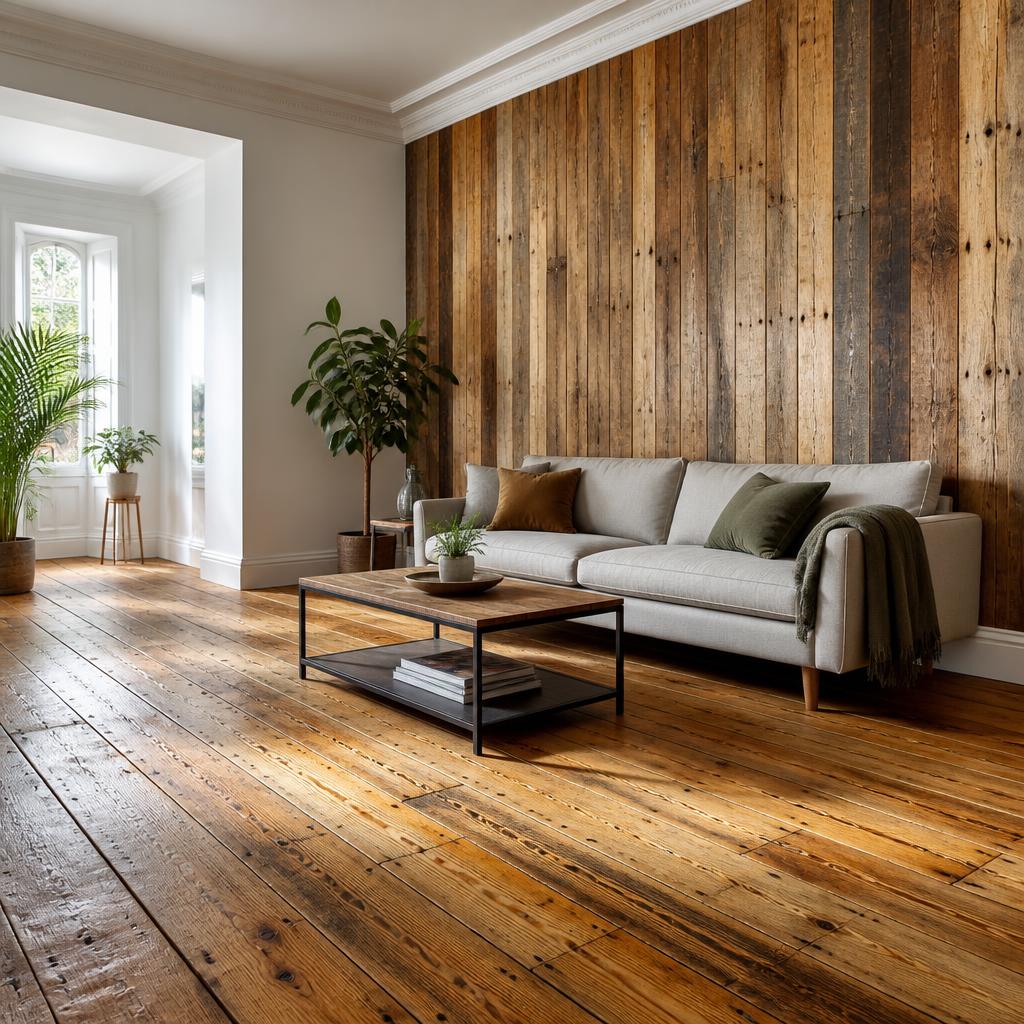
Why choose reclaimed historic timber?
Reclaimed timber brings character, history and environmental benefits to floors and feature walls. Using salvaged boards reduces demand for new timber, keeps usable material out of landfill and often offers richer grain, patina and species variety than modern fast-grown boards. For homeowners seeking an authentic Victorian or Edwardian look, reclaimed boards can provide original widths, worn edges and surface marks that contribute to a genuinely period feel while supporting local circular-economy efforts.
Sourcing matching floorboards at a reclaimed yard
Begin by measuring the area you intend to cover and photographing any existing boards you want to match (grain, board width, tongue-and-groove profile and thickness). At a reclaim yard like Solo Wood Recycling in Croydon you’ll often find batches of similar-era boards—Victorian or Edwardian planks, scaffold boards and other salvage—with variations between pieces. Bring samples or clear photos so staff can help you identify matching runs. Customers frequently find suitable reclaimed floorboards there, and the team is used to advising on what will suit different projects.
What to look for when selecting reclaimed boards
Inspect boards for soundness before purchase: check for deep rot or active insect damage, examine ends and edges for splits, and look for embedded nails or metal fixings. Surface marks, nail holes and patina are often desirable aesthetically, but structurally compromised pieces should be avoided for primary floor components. If you plan to use reclaimed boards for a feature wall rather than a load-bearing floor, you can be more permissive about surface wear. Yard staff can point out suitable batches and help you identify pieces better suited to shelving, panelling or flooring.
Preparing reclaimed boards for reuse
Preparation typically includes removing nails and old fixings, cleaning, and addressing any minor decay or gaps. Light planing or sanding can level uneven boards and expose fresh wood for finishing, while careful filling preserves character where needed. Allow reclaimed timber to acclimatise to your home environment before installation to reduce movement, and consider professional advice for subfloor preparation and moisture testing if you intend to use reclaimed timber as a primary floor. For feature walls, ensure boards are dry and securely fixed to a stable substrate.
Design ideas and finishing options for floors and feature walls
Historic boards work well in simple plank layouts, mixed-width floors, herringbone restorations (if sufficient matching material is available) or as contrasted feature walls behind a bed or fireplace. Finishing choices influence the final look: oil or wax maintains a natural, hand-worn appearance; a hard-wearing clear finish gives more protection for high-traffic floors. Many people choose to retain some patina—scratches and nail marks become part of the story—while sealing for cleanliness and durability. Test finishes on a sacrificial offcut first to confirm colour and sheen.
Examples from Solo Wood Recycling and what customers report
Solo Wood Recycling’s yard regularly yields Victorian and older boards suitable for shelving, flooring and decorative panelling. A recent customer visit described discovering Victorian boards that would clean up beautifully for a shelf project; others have found old floorboards and scaffold boards for larger renovations. Reviews consistently highlight the yard as a treasure trove of reclaimed timber and praise the knowledgeable, patient team who offer practical advice. This combination of material variety and local expertise makes it easier to source pieces that fit both aesthetic and practical needs.
Planning your visit and next steps
If you are based in Croydon or the surrounding boroughs, bring measurements, photos and a vehicle suitable for transporting timber when you visit Solo Wood Recycling at 43 Factory Lane, Croydon. Expect a rummage-style discovery process—part of the charm of reclaimed yards—and allow time to browse; staff are known for being welcoming and advisory. Keep in mind practicalities such as limited on-site parking and variable stock levels: if you have a specific requirement, contact the yard ahead of time. Choosing reclaimed timber supports local jobs, volunteer training and greener building practices—so visit the yard to find timber for your next sustainable project.
Customer review


Article by
Solo Wood Recycling
South London Wood Recycling Project is a Croydon-based not-for-profit social enterprise dedicated to saving timber from landfill. We rescue 60-100 tonnes of wood every month, reconditioning high-quality material for eco-conscious builders, DIYers, and designers. Whether you need raw reclaimed timber for a home project or a unique piece of bespoke furniture commissioned from our expert workshop, we provide sustainable solutions that don't cost the earth. From pallets and scaffold boards to architectural salvage, our yard is a treasure trove for creators. By choosing us, you’re supporting local jobs, volunteer training, and a greener London. Visit our yard or contact us today to start your next sustainable project!