Building Slimline Bookshelves and Wall Storage with Reclaimed Wood in a London Flat
A practical, eco-focused guide for Croydon, Sutton and Merton residents on selecting reclaimed boards, measuring tight spaces, preparing timber, and fixing slimline bookshelves and wall storage safely in rented or owned flats.

Why choose reclaimed wood for flat storage
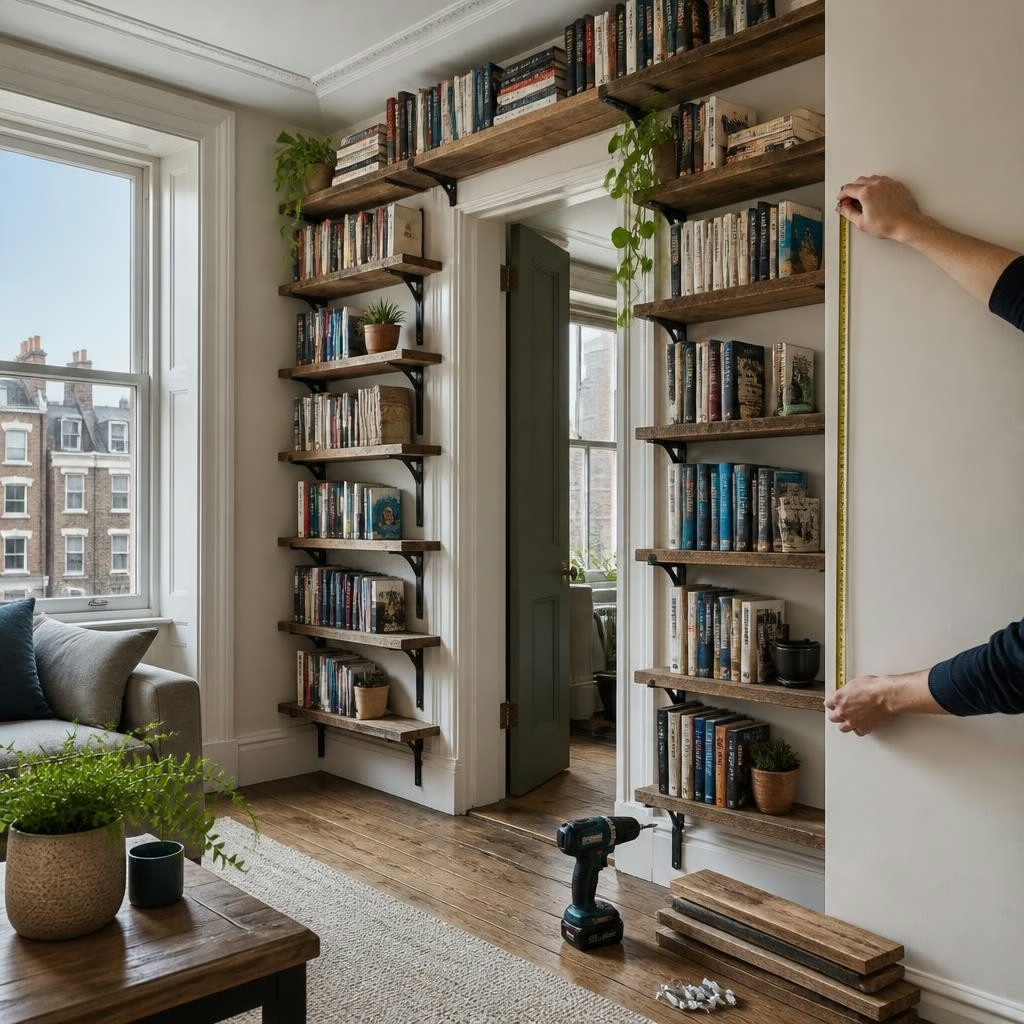
Reclaimed timber brings character to living spaces while reducing waste and the demand for new, resource-intensive materials. For London flats where space and sustainability matter, reclaimed boards make compact, characterful bookshelves and wall storage that tell a story. Using reclaimed timber also supports local circular-economy projects and social enterprises that keep wood out of landfill and create training and local jobs.
Selecting suitable boards at the yard
Start your project by visiting a local reclaimed-wood yard to inspect pieces in person. Look for boards that are straight enough for shelving and free of active rot. Pallet planks, scaffold boards, long floorboards and salvaged Victorian boards are commonly available and offer a range of widths, thicknesses and surface character. Bring photos of your wall and a list of preferred board depths so staff can advise on suitability; many yards have experienced, patient teams who can point out reclaimed timber best suited to slimline shelving and help with loading.
Measuring tight spaces and planning the layout
Accurate measurement is essential in a small flat. Measure the full height and width of the intended wall, and note obstructions such as skirting, sockets, radiators, windows and door clearances. For slimline shelves, plan around the depth you need for the objects you will store—books require more depth than a display shelf—and consider vertical runs or stacked narrow shelves to maximise storage without narrowing circulation space. Sketch a simple elevation showing shelf positions and the locations where supports will meet the wall to ensure fixings can be placed into safe points.
Preparing reclaimed boards for indoor use
Before fixing reclaimed boards indoors, clear them of old nails, screws and staples and check for embedded metal with a magnet. Light cleaning and sanding will reveal the timber’s natural character; remove loose dirt and flaking finishes and flatten high spots where feasible. If boards are warped or uneven, you can plane or joint them to a consistent face, or embrace the irregularities by using thicker brackets or mounting a thin plywood backing. Choose low-VOC or water‑based finishes and sealants to protect the wood for indoor use while keeping the environmental impact low. If you are unfamiliar with power tools or finishes, seek guidance from the yard team or a skilled tradesperson.
Safe fixing methods for flats and rented homes
Safety and landlord rules must guide how you attach shelving in a flat. Locate studs or masonry behind plasterboard with a detector before drilling, and mark any concealed services. For heavy loads, mounting into studs or masonry is preferable; where that is not possible, use heavy-duty plaster anchors or toggle bolts rated for the expected load. Consider French cleats or continuous cleat systems to spread weight along the wall and reduce the number of high‑load fixings. If you are renting, discuss reversible options such as picture-rail-mounted shelves, freestanding leaning shelves that rest on the floor, or rails screwed into fewer, easily repaired points; always confirm consent with your landlord and consult a qualified tradesperson for structural concerns.
Design ideas to maximise space and style
In compact London flats, small design choices multiply into usable storage. Narrow, deep shelves can be swapped for several shallower shelves to improve access; mix open shelving with closed boxes to hide clutter; use vertical shelving that reaches toward the ceiling to use otherwise wasted height. Reclaimed boards provide visual warmth and patina—mixing different boards and finishes deliberately can create an industrial or vintage look. Consider using identical bracket types and consistent spacing to keep a tidy, engineered appearance that complements the irregularities of reclaimed timber.
Care, sustainability and visiting Solo Wood Recycling
Maintain reclaimed shelves with gentle cleaning and occasional re‑sealing using low-VOC finishes to preserve the wood’s patina and longevity. Choosing reclaimed timber is a small but meaningful way to reduce construction waste and promote a circular economy. If you live in Croydon, Sutton or Merton and are planning shelving or wall storage, visit Solo Wood Recycling at 43 Factory Lane, Croydon to see available boards and get advice from the team. The yard’s variety of reclaimed timber and experienced staff can help you find characterful, affordable material for your project—supporting reuse and a greener London. Bring your measurements and sketches, and ask the team about the best options for loading and transport.
Article by
Solo Wood Recycling
South London Wood Recycling Project is a Croydon-based not-for-profit social enterprise dedicated to saving timber from landfill. We rescue 60-100 tonnes of wood every month, reconditioning high-quality material for eco-conscious builders, DIYers, and designers. Whether you need raw reclaimed timber for a home project or a unique piece of bespoke furniture commissioned from our expert workshop, we provide sustainable solutions that don't cost the earth. From pallets and scaffold boards to architectural salvage, our yard is a treasure trove for creators. By choosing us, you’re supporting local jobs, volunteer training, and a greener London. Visit our yard or contact us today to start your next sustainable project!